

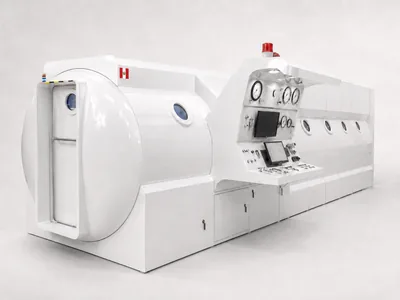
Operational definition of each architecture
A monoplace chamber is a pressurized cylinder for a single patient, generally pressurized with oxygen or air depending on design. A multiplace is a pressurized room with multiple seats where patients breathe oxygen through masks or hoods while the chamber is pressurized with air. This technical difference drives everything else.
Capacity and throughput
Monoplace: one patient per session. Multiplace: multiple patients per session, multiplying daily capacity. But the correct measure is effective session-hour, not physical size: an idle multiplace costs more than an efficient monoplace.
Staffing and infrastructure
Monoplace requires a trained operator and medical supervision on call. Multiplace requires an inside attendant (tender), medical supervision and compatibility with life support for critical cases. Multiplace operating cost is always higher because of staffing.
- Monoplace: 1 operator per shift
- Multiplace: operator + tender + medical oversight
- Multiplace supports critical patients with life support
When to choose each
Monoplace is the standard pick for clinics, outpatient centers, diabetic-foot programs, sports medicine and moderate-volume centers. Multiplace makes sense in reference hospitals, high-demand centers, programs with therapeutic attendant or cases requiring in-chamber life support.
Summary comparison
Quick view for initial evaluation:
- Initial investment: monoplace < multiplace
- Physical footprint: monoplace < multiplace
- Simultaneous capacity: monoplace = 1, multiplace = multiple
- Operating cost: monoplace lower
- Critical cases: multiplace with internal support
- Implementation time: monoplace faster