
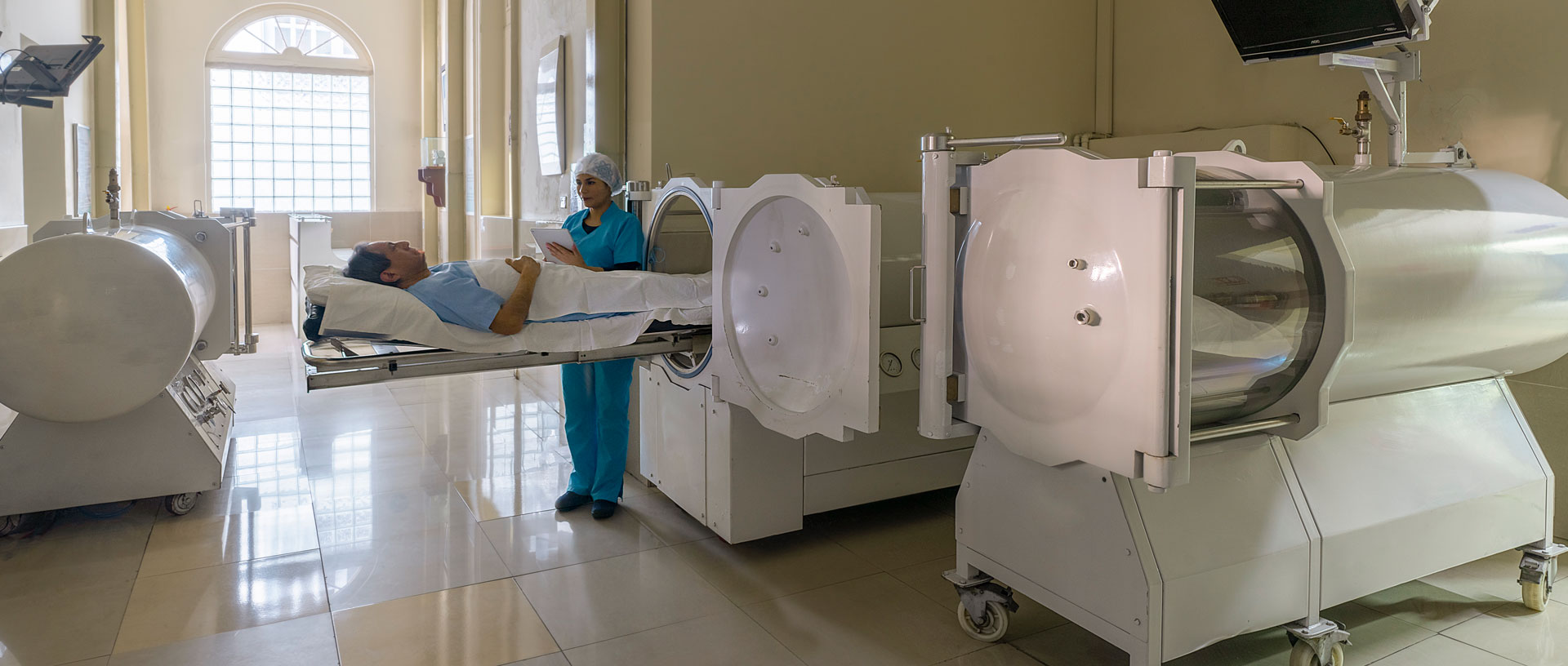
What hospitals look for in a hyperbaric chamber program
Hospital procurement is rigorous. Programs evaluating OHB typically need to satisfy multiple stakeholders simultaneously: clinical leadership (indications, safety, outcomes), biomedical engineering (maintainability, documentation, parts), facilities (room design, gases, power), finance (capex/opex), and compliance (technical documentation, regulatory positioning).
Our proposals are structured to address each of those audiences. Technical packages include chamber specifications, factory test records, commissioning protocols, training scope, maintenance plans and a documented regulatory posture for the destination market.
- Continuous-duty engineering suitable for hospital operation
- Documentation packages prepared for procurement and biomed review
- Installation coordination with hospital facilities team
- Clinical and operator training prior to first patient
- Preventive maintenance and parts strategy
- Single technical interlocutor across the project
Monoplace vs multiplace for hospital programs
Hospital hyperbaric units typically pick between reinforced monoplace (N-Series) for individual treatment workflows, or multiplace (MP-Series) when the program needs to treat multiple patients per session, support critical-care-capable configurations, or run academic and research workloads. The selection follows expected volume, scope of indications, and growth plan.
Facility planning for a hospital hyperbaric unit
The chamber is only one element. The room — barosala — must accommodate the chamber footprint, attendant station, oxygen and air systems, ventilation to manage residual O₂, patient flow including stretcher access, and emergency egress. We deliver the functional room design and coordinate with the hospital's architects and contractors during construction.
Training and clinical readiness
A hospital hyperbaric program goes live only when the team is ready. Clinical leadership, nursing, biomedical engineering and operator staff receive training tied to the installed chamber, with documented protocols, contingency drills, and reference materials that stay with the institution.
Service, parts and continuity
Hospital programs cannot afford unplanned downtime. We structure preventive maintenance schedules, document service intervals, and propose critical-parts stocking arrangements adjusted to operational intensity. For international projects, we coordinate with qualified local partners.